However, the afternoon was almost spoiled right away when I came upon a family of poachers. They were foreign (Chinese) and spoke no English but they certainly knew what they were doing, digging octopi out from their hiding places under the rocks with a hook. They were dressed as fishermen with heavy boots and waterproof pants. Grace was furious and tried to tell them that taking anything out of the park was forbidden, but they just shrugged her off. We saw them put at least one octopus and one Brittle Star in their cooler. I felt slightly relieved when Grace called the number given on the map they hand out at the gate and reported them. Someone else had already reported them and Grace was told that they planned to confront them as they left. My concern was that there are several ways to get down to the tidepools, so how could they be sure these people would leave by the gate?
My friend Yvetta has sent me further information on the subject which I will pass on to you so you will be informed. A fishing license does not give someone the right to take octopi from the Preserve. Abalone Cove State Marine Park is a Marine Protected Area. The state Fish & Game regulations clearly state that all marine aquatic plants and all invertebrates including worms, squids, octopi, most shellfish, sea urchins, sea stars, and sea cucumbers, are prohibited for recreational take. If you should see something like this happening in the future, it is recommended that you not confront the person or persons. Instead, contact the California Fish & Game or have the person at the gatehouse do it. The numbers to call are (858) 467-4201 (South Coast Region) or (831) 649-2870 (Marine Region). I'm planning to add these numbers to my cell phone.
After Grace left, I climbed all the way out to the point which is where I took the photo at the top. You can see the opening to the cave that I mentioned earlier. No one was going across the gorge today, however. The waves were fiercely crashing into the surrounding rocks. Many thanks to Yvetta for all the information she sent me as well as the help with identifying species.
 Ok, all you tidepool lovers, we're due for another set of negative tides this weekend. They will range from -1.3 on Friday to -1.7 on Sunday, again right in the middle of the afternoon. You can expect the tide to be very low one hour before and one hour after the times given below. Ok, all you tidepool lovers, we're due for another set of negative tides this weekend. They will range from -1.3 on Friday to -1.7 on Sunday, again right in the middle of the afternoon. You can expect the tide to be very low one hour before and one hour after the times given below.02/06/2009 Fri 01:29PM LST -1.3 L
02/07/2009 Sat 02:08PM LST -1.6 L
02/08/2009 Sun 02:46PM LST -1.7 L
02/09/2009 Mon 03:21PM LST -1.5 L Unfortunately, the weather may not be so cooperative this time as we are due for some rain. If we are lucky, Sunday and Monday afternoons may be clear. It will be much colder, too, with a high of 56 to 60 degrees predicted in that time period. But we need the rain, so I'm not complaining too much.I have to work Friday and Saturday, so I will probably try to go out on Sunday. If you decide to do some tidepooling this weekend, dress warm, be kind to the animals, take lots of pictures, and be sure to share them with me when you get back. See you at the cove!
 I made great progress on the Feather and Fan Cardigan last November. I finished the right upper bodice at Thanksgiving but then put the project aside in order to finish the Maltese Shawl for my DIL. Now picking up the cardigan again, I am finding it hard to get back into it. I usually take notes when I knit, especially when there are two of something to knit that have to be exactly alike. But I guess I wasn't as careful this time, or I was in too much of a hurry when I started the left upper bodice. I ended up ripping it out at least three times before I got things right. Well, almost right. I was still one stitch off with my sleeve increases on the front side, but I came out with the right number of stitches at the shoulder. Hopefully, when the seams are stitched up, no one will be able to tell. But you never know which mistakes will show and which will remain forever hidden. When the left upper bodice is done, the lower bodice will be knitted down in plain stockinette stitch. Here is a photo of what it should look like when finished. Rowan has come out with a new magazine. I really love their styles although there are a lot of them I would never wear. I currently have three Rowan projects that are started but not finished—the Helon Dress, Anya, and Glade. The Helon Dress came to a stop because of sizing problems. As Grace over at Bad Mom, Good Mom related, getting the size right is the hardest part of knitting. I would have thought that having a sewing dummy would help, but apparently not. Sometimes as soon as you cast on, the die is cast so to speak. The size is set and there's nothing you can do to change it. That's the case with the Helon Dress.  The magazine was on sale at Sakonnet Purls (I think the sale is over now). Yarn was on sale, too, and they got me with the free shipping offer for orders over a certain amount. So I decided to buy some yarn while I was at it, but I didn't have any projects in mind. When I saw this luscious yarn by Knit One, Crochet Too, I was hooked. As you can see from the label, it is a handpainted yarn called Ambrosia, 70% baby alpaca, 20% silk, and 10% cashmere, color lavender cream. I bought six hanks, enough to make a tank top or short-sleeved top. When the yarn arrived, I was delighted with it and spent many hours searching through my pattern books for just the right project to knit with it. The current choice is another CEY Make it Modern pattern called Girl Tank, but I may change my mind. The yarn is so special, it needs special treatment and I just know I am going to love working with it.
After spending two weeks playing, practicing, rehearsing, and playing some more, I am finally able to sit down at the computer and write a post. I have done some knitting and I'll bring you up to date on that later. (I have some gorgeous yarn to show you.) I haven't written about my diet in a very long time, so I thought I'd start back with that topic. Dr. Eades has had several very good postings recently on his blog and I'd like to draw your attention to a couple of them. If you are new to my blog, I am a low-carber and have been for almost five years now.One of the things I like about the Drs. Eades is that they are willing to change their views or update their recommendations as new research comes to light (if the research is good research). They use their blogs to comment on these new findings and sometimes the best stuff is in their comments to the comments from readers. They will have to do a revision of their books someday. They do have a new book in the works that was supposed to come out this January, but release has been delayed until the fall. The burning question that seems to be on everyone's mind is, what do you do if you try low-carb eating to lose weight and you reach a stall, a plateau, and just can't get things going again. Or you go off the diet, gain weight, and want to get back on the diet to lose that weight, but find that things are not so easy the second time around. Then there are those of us who have reached a certain age and find that the pounds just pile on despite all our best efforts.Dr. Eades points out that one cause for the stall, the difficulties losing weight, and the middle-aged weight gain is a tired or stressed liver.The liver is the primary organ involved in metabolism. In order to lose weight successfully, you need to have a liver that is running on all cylinders. Dr. Eades gives several reasons why the liver may not be functioning up to par, including old age, but also including the fact that alcohol, medications, caffeine, and excess insulin in the blood caused by excess sugar in the diet (remember all carbs are sugar) need to be processed by the liver. It has been found that being overweight can cause the same liver dysfunction that drinking too much alcohol does.People who consume too much alcohol over too long a time period develop first a fatty infiltration of their liver cells, then inflammation that progresses to fibrosis, then ultimately, if the drinking doesn’t stop, to cirrhosis and possibly even liver cancer. This same exact progression takes place in the livers of many people who are overweight and/or insulin resistant. If you have too much insulin circulating in your blood because your liver can't process it all, you will have trouble losing weight.Insulin stays in the circulation because it is put there by the pancreas and because it isn’t metabolized in the liver. A liver that isn’t functioning up to snuff won’t break down insulin as rapidly as it should. Consequently, higher levels of insulin mean more difficulty in losing weight. Plus, since the liver is the major organ involved in the entire metabolic process, it works a whole lot better to stabilize everything when it is unhindered by having to detoxify a lot of unnecessary stuff. Which is why you need to baby your liver when you restart your low-carb diet. He recommends laying off the coffee (and I would include any drink with caffeine in it) and alcohol until you get your system going again.Another great post was about eating low-carb in Mexico. It can be done. In fact, I think it can be done anywhere there is good food and attention is paid to the preparation of that food.Speaking of liver, my sister and I were talking about how we both like to have liver now and then, but our families won't touch the stuff. We were wondering if it is because we were forced to eat it when we were young and now it feels like "comfort food" to us. I just had some calves' liver yesterday and I am so full of energy today. That happens every time I have liver. But my sister and I both agree that it has to be cooked right—very lightly. I like to sauté mine over a low heat in butter and coconut oil with just a little seasoning. It's really good that way. I accompanied last night's liver with some wonderful cream of celeriac soup. I can give you that recipe, because I made it up myself. A hand-held blender is a great tool to have, but if you don't have one, you can use a food processor. It's messier but does the job.buttercoconut oil1 celeriac, peeled and cut into 1-inch chunks3 stalks celery, chopped coarsely1 carrot, chopped coarsely2 small or 1 medium onion1 1/2 cups water1 can coconut milksea saltMelt the butter and coconut oil in a soup pot. Add the celeriac, celery, carrot, and onions and "sweat" (put the lid on the pot) for about 15 minutes. Add 1 cup of water and bring to a boil. Simmer the vegetables for 20 minutes or so, until the celeriac is soft. Turn down the heat and add the coconut milk. Purée the soup with a hand-held blender right in the pot. Add the other 1/2 cup of water (or more) if the soup is too thick. Add some salt and bring back to a simmer.I like to serve the soup with a drizzle of a good quality olive oil in the middle.The entire pot of soup will contain about 28g of carbohydrates, but you will get about 3 or 4 servings out of it depending on the size of your celeriac and how thick you like the soup. Considering that one smallish boiled potato (2.5 inch diameter) will have 25g of carbs, this is a good deal. At only 7.3g per cup, celeriac is a good substitute for mashed potatoes.
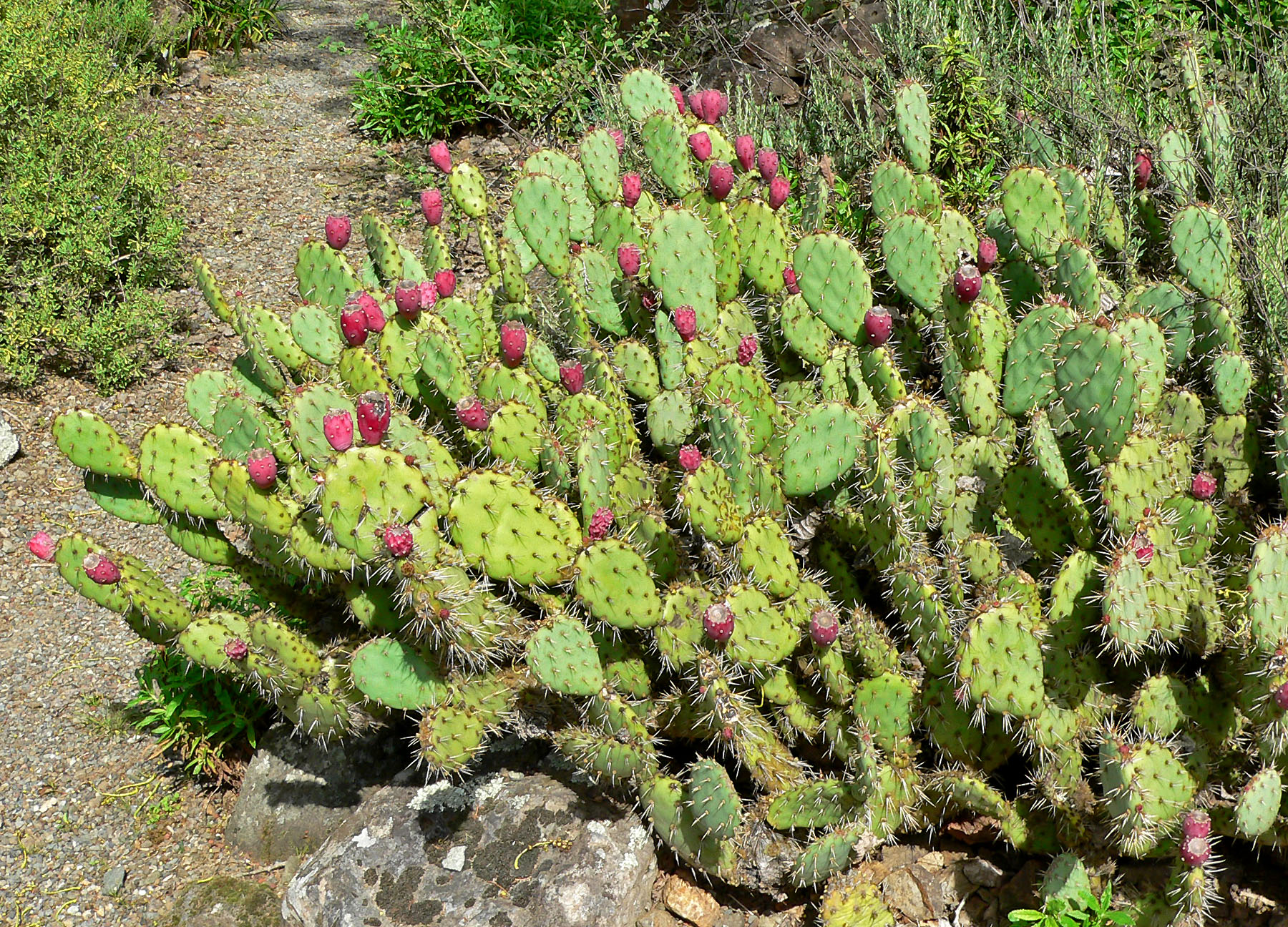
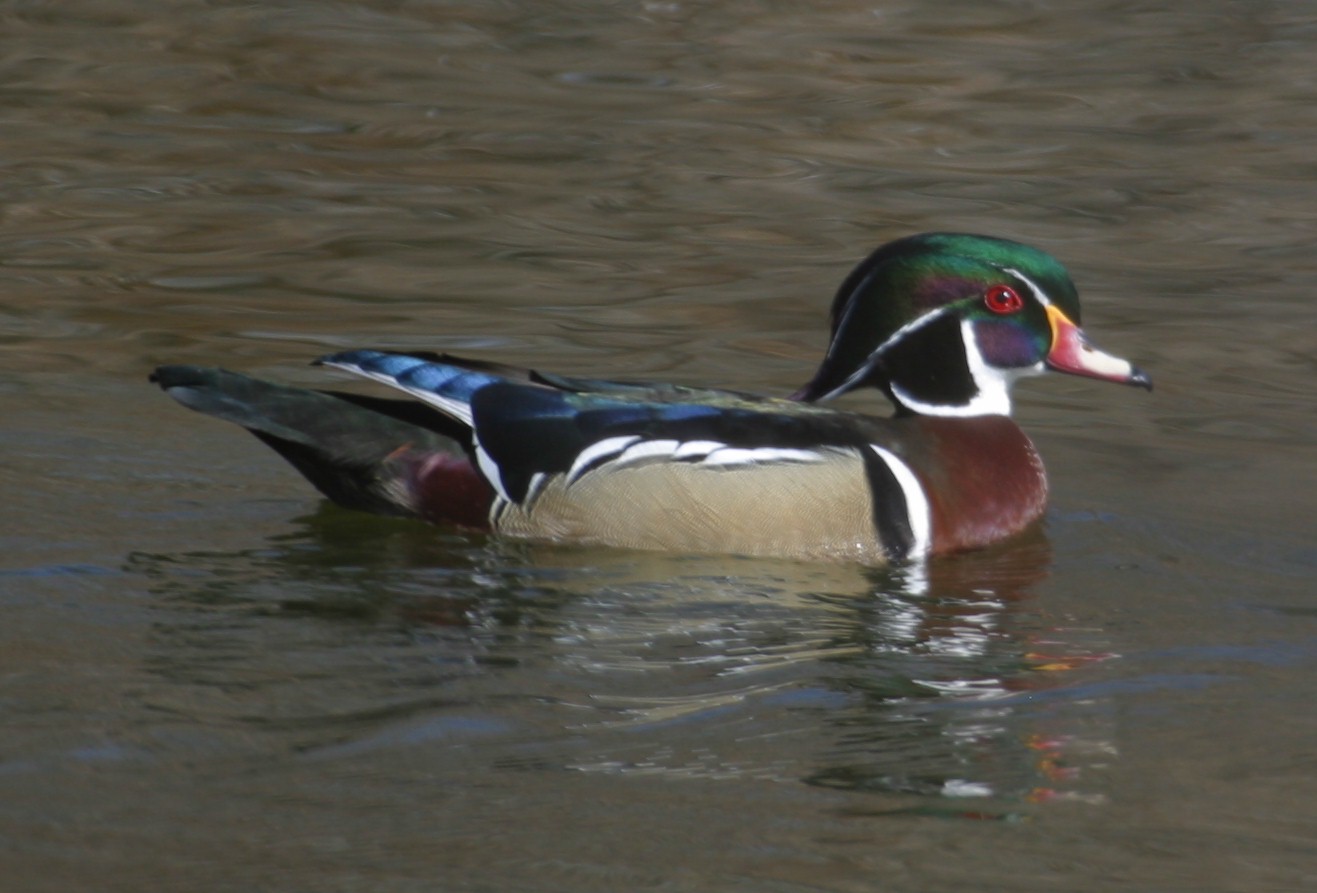
I took my two-and-a-half year old grandson to the nature center near his home on Friday afternoon. We left almost as soon as he got up from his nap because I knew that they closed the gates at 4:00 pm in the wintertime. We hadn't been there since the fall and I wondered if the ducks had come back.The building which houses the neat displays of snakes, bugs, frogs, and fish was already closed when we arrived, so we went on a hike along the path that goes up the sides of the canyon. He is big and strong now, so he can climb the wood tile steps all by himself. We walked quickly by the "no-touch" Prickly Pear plants. He remembered when he picked up a fruit of this plant last summer and it was days before we got all the almost invisible prickles out of his fingers. We noticed that the Sugar Bushes were blooming, the Black Sage had new green shoots, and the Toyon! Just full of beautiful red berries. But don't eat them. The birds eat them he told me.Back down by the creek we discovered that the ducks were back, Wood Ducks, with their white stripe down the side. Some were placidly paddling in the water and some were sitting on the bank. "What's a bank?" he asked. I really struggled to explain that word to him. He learned that if he ran to the edge of the bank and yelled at the ducks they would fly away upstream. So we sat down quietly, shhhh, and watched them for awhile.He climbed around the multiple trunks of the oak trees and we had a discussion about roots. No, the trees don't move once they put their roots down into the ground. The ground had been littered with acorns last fall, but now there wasn't a single one to be found. Had the Acorn Woodpeckers and squirrels gathered them all? While collecting acorns last fall and taking off their "hats" we had talked about seeds and how these big, tall trees had grown from the small seeds. This time we found catkins that looked like little caterpillars. He is very good at finding very small things.We checked under the platform they use to give nature talks to see if the Bobcat was still sleeping there. Nope. We walked up the path on the other side of the canyon and found the butterfly garden. The big metal butterflies that they have set out here reminded him of umbrellas. His comment reminded me of seeing him standing at my door with his little Thomas-the-Train blue umbrella last December. We found some old rusted farm tools. He was full of questions now. What's this? What's this? I was at a loss. Uhmm... That's a spring. That's a bolt. Those are wheels. I tried to explain that this was a plow and that a horse would be attached to the front to pull it. It would make a furrow, ditch, hole in the ground and then the farmer could plant his seeds. We examined this tool for a very long time.We found another "no-touch" plant. This one conveniently had a sign next to it with a picture warning about its presence, Poison Oak. The hummingbirds buzzed angrily at us. No wonder. Their feeder was nearby and it was empty. As we walked along, I would ask him which way he wanted to go next and he would reply, "Follow me, Grandma!" He is growing up so fast. He is no longer Baby C., not even Toddler C. anymore. What do I call him now?
Last night I went in search of hidden treasures of a totally different kind—treasures hidden in the stars. I went up to Ridgecrest with the guys from the astronomy club. I hadn't been out with my telescope since September and the warm days we have been having with no clouds or fog made the prospects good for a perfect evening of stargazing. Actually, we ended up at Del Mar High School which is nearby because the folks at Ridgecrest have added a new lock to the gate and no one had the key. Quite a few visitors managed to find us anyway and there was a continuous stream of people coming to have a look through our scopes.It had been so long since I used my scope that I almost forgot how. I did forget to bring my binoculars which I use to find my bearings in the sky, but after a failed first attempt at alignment, I was off and running with no further problems the rest of the night. When I go out, I make a list of things that I want to see and when I have exhausted the list, I go hunting. I am much more familiar with the summer sky (I wonder why?) than the winter sky. Orion is there in the winter, of course, and the Orion Nebula is always a spectacular sight to view with any scope or even just binoculars. But I decided to concentrate on other wonders "hidden" in Orion.A few months ago, I purchased James O'Meara's Hidden Treasures, published by Cambridge University Press. It's a sequel to his Deep-sky Companion books on the Messier objects and selected items from the Caldwell catalog. His idea was to write a book about other interesting things to look at with a small telescope that are not on either of these two more popular lists.The focus of my attention last night was Hidden Treasure No. 34 (NGC 2024, known by many names including the Flame Nebula) and the area around Alnitak, one of the stars in Orion's belt. (The famous Orion Nebula is the second star of his sword.) This area includes several interesting things to look at. First of all, there is Alnitak itself which actually is a tight double star with a third companion, then there is NGC 2023 as well as 2024, IC 431, 432, 435, and 434 which contains the famous Horsehead Nebula. Just slightly below Alnitak is Sigma Orionis, another multiple star. I had trouble seeing the nebulosity in this area due to the glow of city lights and did not see the Horsehead, but still enjoyed getting to know this part of the night sky. Click on the links to see some spectacular photos of these nebulas and you'll see why I went in search of them.My "hunting" brought me to M36, 37 and 38. These are three open clusters in the constellation Auriga. At first I couldn't tell which one I had, but finally found all three after carefully examining their structure. I take notes as I observe and try to draw a picture of what I see in the scope. This can be a very tricky thing to do when you have a cluster of hundreds of stars, not to mention trying to draw by the light from a small red flashlight. Nebulas are also very hard to depict. I need to get myself better drawing tools. But someone commented that you really haven't observed something until you have tried to draw a picture of it.
|